
A hospital stay is stressful. Going home can be even harder.
Discharge day often moves fast. A nurse hands over a stack of papers, a ride is waiting, and your parent just wants their own bed. That is exactly when important details slip through the cracks.
This hospital discharge checklist for elderly patients gives your family a clear, step-by-step plan. Use it to ask the right questions, prepare the home, and spot problems early.
A good discharge plan starts on day one of the hospital stay, not the morning your loved one leaves.
This guide is general information, not medical advice. Always follow the instructions from your loved one’s doctors and nurses.

Why a Discharge Checklist Matters
Older adults are more likely to leave the hospital with new medications, new limits on movement, and new care needs. Many also go home still weak or confused from the illness, the surgery, or the hospital stay itself.
Without a plan, small problems can snowball. A missed dose, a skipped follow-up visit, or an unsafe bathroom can send someone right back to the emergency room.
A checklist keeps everyone on the same page. It helps family members, caregivers, and the medical team work from one shared list instead of guessing.

Before Your Loved One Leaves the Hospital
The most useful work happens before discharge. Ask the hospital’s discharge planner, case manager, or social worker to sit down with you. Do not wait for the final paperwork.
Questions to ask the care team
- What is the diagnosis, and what should we expect over the next few weeks?
- What can my parent do on their own, and what do they need help with?
- Do they need physical therapy, home health, or special equipment?
- Who do we call if something changes after hours?
- Is a short-term rehab or care facility stay recommended?

Confirm the paperwork
Before you leave, make sure you have a written discharge summary. It should list the diagnosis, medications, restrictions, and follow-up appointments.
Ask for a copy of any test results too. Keep everything in one folder so any caregiver can find it fast.
Ask about “inpatient” versus “observation” status
This detail surprises many families. A patient can spend several nights in a hospital bed and still be classified as “under observation” instead of admitted as an inpatient.
That distinction can affect what Medicare covers afterward, including short-term skilled nursing care. Ask the hospital which status applies, and write down the answer.
Ask for hands-on training
If your parent needs wound care, injections, or help moving safely, ask a nurse to show you how. Watching once is not enough.
Practice the task while the nurse is still there, and ask them to correct you. It is far easier to learn in the hospital than to figure it out alone at midnight.

Get the Medication Plan Straight
Medication mistakes are one of the most common problems after a hospital stay. Doses change, old prescriptions get stopped, and new ones get added.
Ask the nurse or pharmacist to go through every medication with you, one by one.
- New medications: What is each one for, and when should it be taken?
- Changed doses: What is different from before the hospital stay?
- Stopped medications: Which old prescriptions should be thrown away?
- Side effects: What should we watch for, and when should we call?
- Pharmacy pickup: Are the prescriptions already filled, or do we need to stop on the way home?
Bring every bottle your parent takes, including vitamins and over-the-counter products, to the first follow-up visit.
A weekly pill organizer helps a lot. So does a simple written schedule taped to the kitchen cabinet.
If your parent has trouble remembering doses, consider whether they can safely manage this alone. Daily medication support is one of the main reasons families look into assisted living.
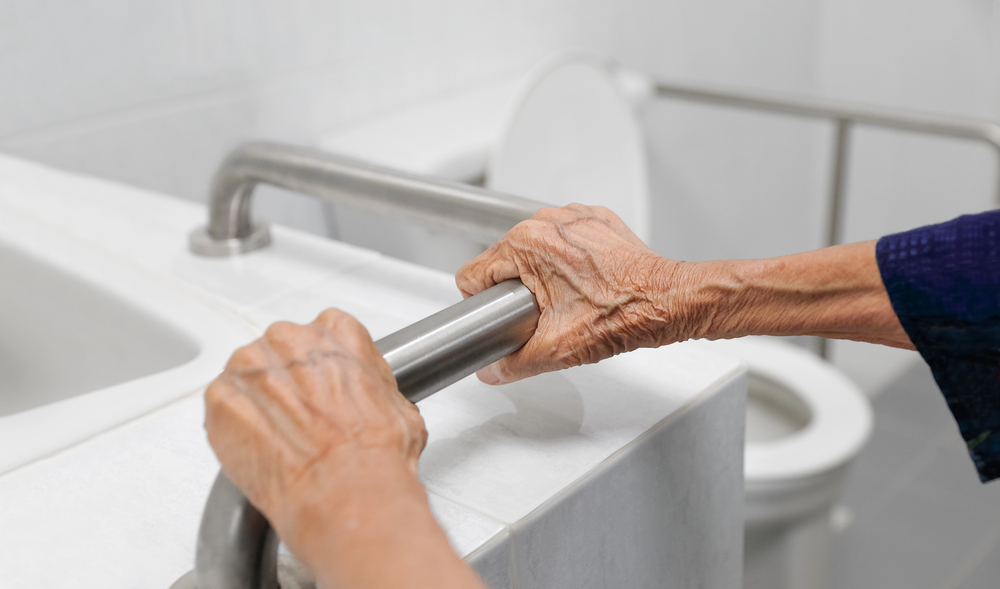
Make the Home Safe Before They Arrive
A home that felt fine before the hospital may not be safe now. Walk through the house before discharge day and look at it through your parent’s new limits.
| Area | What to check | Simple fix |
|---|---|---|
| Entry and hallways | Loose rugs, clutter, cords, poor lighting | Remove rugs, clear paths, add night lights |
| Bathroom | Slippery floors, no grab bars, low toilet | Add grab bars, a shower chair, and a raised toilet seat |
| Bedroom | Bed too high or low, phone out of reach | Adjust the bed, keep a phone and lamp within reach |
| Kitchen | Hard-to-reach items, little fresh food | Move daily items to waist height, stock easy meals |
| Stairs | No handrail, steps in poor light | Install sturdy rails on both sides, add lighting |
Plan for the first week
The first days at home are the riskiest. Fatigue, dizziness, and confusion are common, so nobody should be alone for long.
Make a schedule of who will stay, who will cook, and who will drive to appointments. Stock the fridge before discharge so no one has to rush to the store.

Lock In Follow-Up Care
Follow-up visits are not optional extras. They are how doctors catch problems before they become emergencies.
- Book the primary care visit before leaving the hospital, ideally within the first week or two.
- Schedule any specialist visits the discharge summary recommends.
- Arrange transportation, since many older adults should not drive right after a hospital stay.
- Ask about home health, physical therapy, or occupational therapy, and confirm who will set it up.
- Order equipment such as a walker, wheelchair, or hospital bed before the ride home.
Write every appointment on one shared calendar. Send a copy to siblings and anyone else who helps.
For a deeper look at how Medicare expects hospitals to plan for this transition, see Medicare’s official discharge planning checklist.

Warning Signs to Watch for at Home
Recovery rarely moves in a straight line. Some ups and downs are normal, but certain changes need quick attention.
| What you notice | Why it matters | What to do |
|---|---|---|
| New or worsening confusion | Can signal infection, medication problems, or dehydration | Call the doctor the same day |
| Fever, chills, or redness at a wound | May point to infection | Call the doctor promptly |
| Not eating or drinking | Raises the risk of weakness and dehydration | Tell the care team and track intake |
| Falls or near-falls | Shows the home or strength level may not be safe | Report every fall, even a minor one |
| Chest pain or trouble breathing | Can be a medical emergency | Call 911 right away |
When in doubt, call. Doctors would much rather hear from you early than late.

When Going Home Isn’t Enough
Sometimes the checklist reveals a hard truth. Your parent needs more help than family can safely provide at home.
That is not a failure. It is a sign that their needs have changed, and your family is paying attention.
Signs your family may need extra support
- Your parent needs help with bathing, dressing, or using the toilet.
- They struggle to manage medications on their own.
- Family caregivers are exhausted or missing work.
- There have been falls, wandering, or new memory problems.
- The home cannot be made safe for their current mobility.

Options to consider
If family caregivers just need a break, a short stay through respite care can give everyone breathing room while your parent recovers.
If confusion or dementia is part of the picture, a secure setting with specialized memory care offers structure and 24/7 supervision.
For long-term daily help with meals, medications, and personal care, families often choose assisted living in Atwater as a safe next step after the hospital.

How Guardian Angel Home Care II Can Help
Guardian Angel Home Care II is a small, family-owned residential care home in Atwater, CA. We have cared for seniors since 2001, and our very first resident was our own father. You can read our family’s story to learn more.
We understand how overwhelming a hospital discharge feels. Many of the families we meet are making decisions in a matter of days, with little sleep and a lot of worry.
Our team offers:
- 24/7 care and supervision in a warm, home-like setting
- Medication management and daily personal care support
- Home-cooked meals, including traditional family recipes
- Dementia care and hospice waiver services when needs increase
- Bilingual staff who speak English, Spanish, and Portuguese
We welcome families from across Merced County and nearby communities, including Modesto and Turlock.
Frequently Asked Questions (FAQs)
What should be on a hospital discharge checklist for elderly patients?
How long does hospital discharge planning take?
Who is responsible for discharge planning?
What if my parent is not ready to go home?
Can an elderly person go straight from the hospital to assisted living?
Take the Next Step With Confidence
A hospital stay changes things quickly. With the right checklist and the right support, your parent can recover safely and your family can breathe easier.
If you are weighing options for a loved one in Atwater or the surrounding Central Valley, we are happy to talk it through. Contact our team or call (209) 357-0512 to schedule a tour.